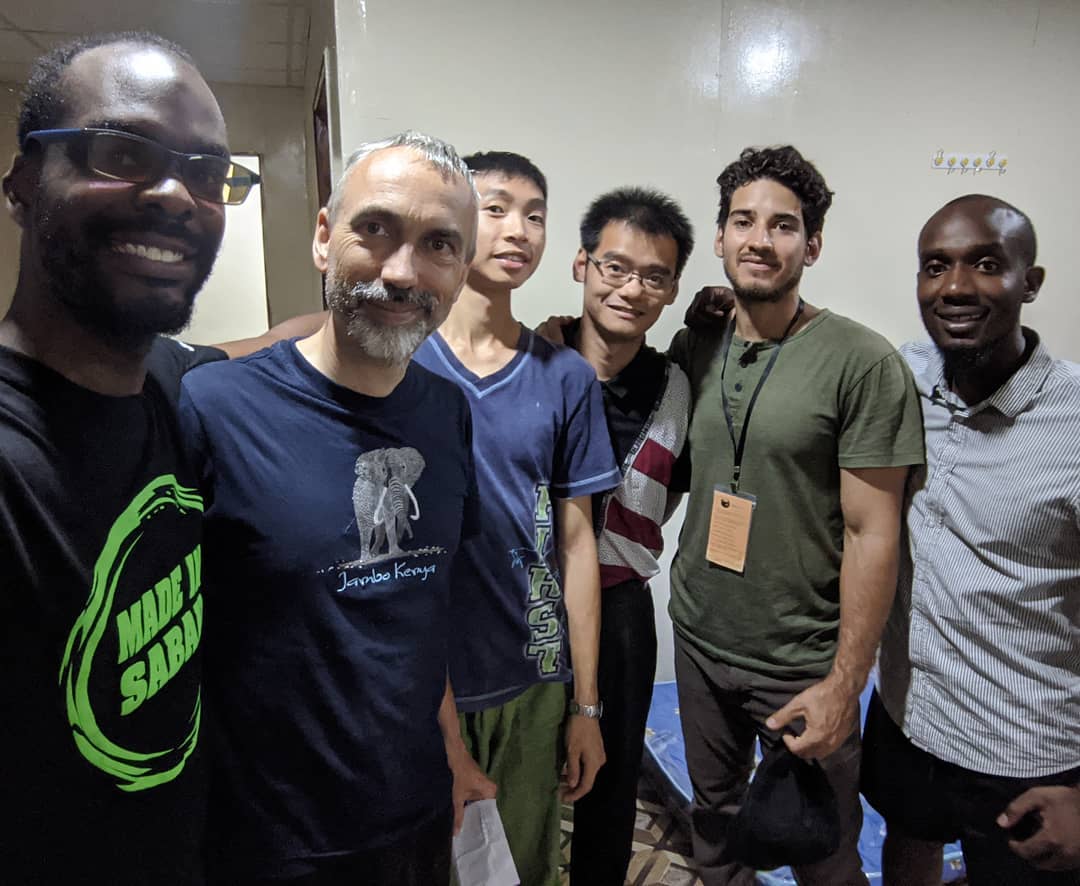
About Me
Eugene Prewitt has been teaching Bible on the college level since 1996. Since 2003 he travels extensively leading canvassing teams and lecturing at churches and youth conferences. His associations with AudioVerse.org and the Generation of Youth for Christ have brought his teachings within the reach of an ever growing audience. For this he is thankful, taking consolation in the fact that where the Bible has been planted a sure and holy harvest will be reaped.
Eugene has written “I want to know what is true. I am almost always studying several Bible themes, and I write as part of my method of study. That is how this collection of documents has come into existence. May these studies be a blessing to anyone confronting the same questions and issues in their life that I have confronted in mine.”
Eugene Prewitt directs IEAT, the Institute of East Asia Training. From there his teachers train young people from around Asia to reach the various people groups of South East Asia. During school breaks and on weekends he and his wife Heidi frequently travel to put on presentations on Bible topics, canvassing and on Christian Education.
Eugene has authored two books, “Woman’s Ordination: 31 Arguments and Biblical Answers,” as well as “Deeper: Investigating the Integrity of Our Prophetic Foundations.” He is currently working on his new book which will become available in 2020.
- Comment to those looking at my sermons: I teach the Bible. Come here for information rather than for excitement. Come to learn rather than to feel.
- Best advice given to me about preaching: Tell less stories, share more Bible. Pray short in public and long in private. Explain the fundamentals so that a child can understand them if you hope to teach the adults.